
When Libraries Stop Flying Flags: What the New Culture War Means for LGBTQ+ Britain
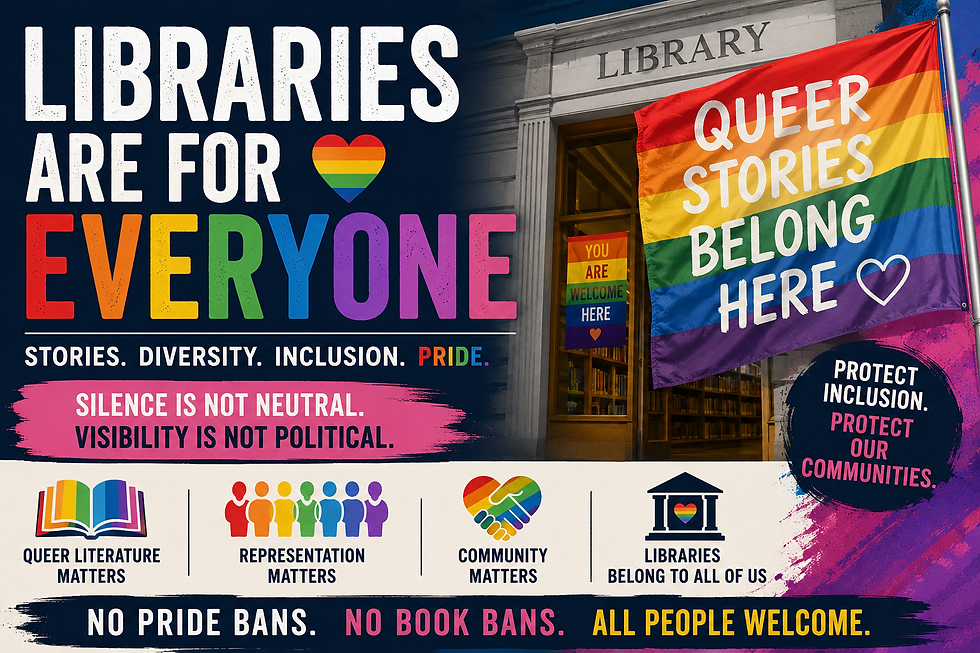
There is something deeply symbolic about a library.
Libraries are not simply buildings filled with books. They are one of the last truly public spaces we have left, places where people can exist without needing to buy something, justify themselves, or prove they belong. For generations of LGBTQ+ people, libraries have been places of discovery, safety, and survival.
Which is why recent decisions by some local councils to scale back Pride-related promotion in libraries feel so unsettling.
In recent weeks, concerns have grown after councils in parts of Essex reportedly discouraged libraries from promoting Pride events through official channels, while similar approaches have appeared in other authorities. Supporters of the changes describe them as an attempt to remain “neutral” or move away from identity-focused campaigns. But for many LGBTQ+ people, the message feels anything but neutral.
When institutions stop acknowledging communities, they do not become neutral.They become silent.And silence has never protected us.
The language being used should concern everyone, not just queer people. We are hearing growing references to “special interests,” “culture wars,” and the idea that inclusion itself is somehow political. Pride flags are being removed. Funding is being questioned. Public support quietly withdrawn. Libraries told not to visibly celebrate LGBTQ+ lives.

None of this happens in isolation.
It follows years of escalating hostility toward trans people, increasing attacks on equality and diversity work, and a political environment where some parties have realised there are votes to be won by creating moral panic around minority groups. We are watching imported American-style culture wars being repackaged for UK politics, and local government is becoming the testing ground.
But what is perhaps most alarming is how ordinary this is beginning to sound.
Because these decisions are rarely presented as overt discrimination. They are framed as “common sense,” “fairness,” or “focusing on core services.” Yet somehow “core services” never seem to include making vulnerable communities feel visible, safe, or welcome.
I was married to a woman who dedicated much of her professional life to ensuring LGBTQ+ people could access queer literature and see themselves represented in public spaces. Her knowledge of LGBTQ+ history and literature was extraordinary, and the work she did within libraries to improve access and inclusion mattered deeply to so many people.
That work was recognised nationally when she received a CILIP Diversity Champion award for her contribution to LGBTQ+ inclusion within library services, a recognition from the professional body for librarians itself. She understood something many politicians now seem determined to forget: access to stories is access to humanity.
For countless LGBTQ+ people, particularly older lesbians, trans people, isolated young people, and those growing up in hostile environments, libraries were often the first place they discovered they were not alone.
Libraries have always reflected society’s values. They promote Black History Month because history matters. They celebrate Pride because LGBTQ+ people exist. They host community events because loneliness, exclusion, and social isolation are real public issues. Removing visibility sends a message whether politicians admit it or not.
And people hear that message loudly.
Young LGBTQ+ people hear it.Older queer people who remember Section 28 hear it.Trans people hear it.Parents of LGBTQ+ children hear it.
They hear: “You are acceptable only when invisible.”
As a lesbian who has spent years working within equality, inclusion, and community spaces, I find this moment deeply worrying, not because of one Pride flag or one library display, but because of the wider direction of travel.
We are seeing a normalisation of hostility.
The people driving this are no longer anonymous trolls on the internet. Increasingly, they are neighbours, elected officials, community leaders, and commentators who feel emboldened to publicly question whether LGBTQ+ inclusion belongs in public life at all.
And yet, despite all of this, I also see resistance.
I see librarians refusing to quietly erase queer stories.I see community groups organising anyway.I see local people signing petitions and speaking out.I see allies understanding that attacks on one marginalised group rarely stop there.
Pride was never simply a party.It was, and still is a protest. A declaration that LGBTQ+ people deserve visibility, dignity, safety, and joy in public life.
That matters now more than ever.
Because once public institutions begin deciding which communities are too “political” to acknowledge, we all lose something important.
Libraries should not be battlegrounds in a manufactured culture war.They should remain what they have always been at their best:places where everyone can see themselves reflected, valued, and welcome.
And if a rainbow display in a library feels threatening to those in power, perhaps the problem was never the flag.
Perhaps the problem is what it represents:a society where difference is visible, protected, and impossible to erase.


Comments